️Life Quotes
 ️
️


Introduction
Chikkamagaluru is India’s coffee capital — a misty hill station tucked into the Western Ghats of Karnataka, and one of the most satisfying weekend getaways from Bangalore. Whether you’re a trekker dreaming of scaling Karnataka’s highest peak, a history lover wanting to walk through 800-year-old Hoysala temples, or simply someone who wants to sit on a plantation veranda with a fresh cup of Arabica coffee, this town delivers on all fronts.
Sitting at an elevation of 1,090 meters (3,580 feet), roughly 245 km northwest of Bangalore, Chikkamagaluru sits right where the Deccan Plateau meets the lush Malenadu region. The name itself means “town of the younger daughter” in Kannada — legend has it that the chief of ancient Sakkrepattana, Rukmangada, gifted this town to his younger daughter as a dowry. His elder daughter received Hiremangaluru, meaning “town of the elder daughter.”
Beyond legend, Chikkamagaluru holds a fascinating place in global history. In the 17th century, a Sufi saint named Baba Budan smuggled seven raw coffee beans from the port of Mocha in Yemen and planted them on the slopes of the Chandradroṇa hills. Those seven seeds gave birth to India’s entire coffee industry. Today, Karnataka produces nearly 70% of India’s coffee, much of it grown across Chikkamagaluru’s 55,000+ hectares of estates.
Best time to visit: September to March. The post-monsoon months (September–November) are lush and pleasant. Winter (December–February) is ideal for trekking. Summer (March–May) is warm but manageable. The monsoon (June–September) is dramatic and beautiful, though the roads can get dangerous.
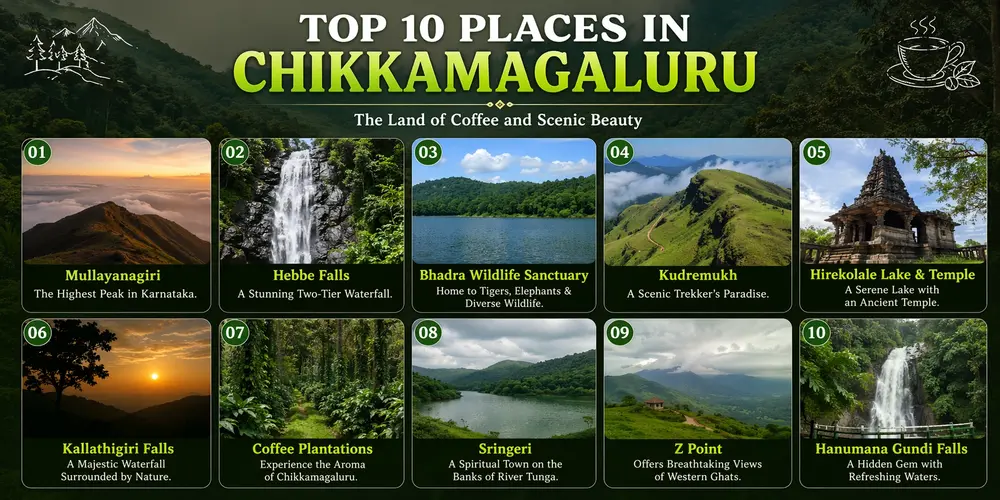
Top 10 Tourist Places in Chikkamagaluru
1. Mullayyanagiri – Karnataka’s Highest Peak
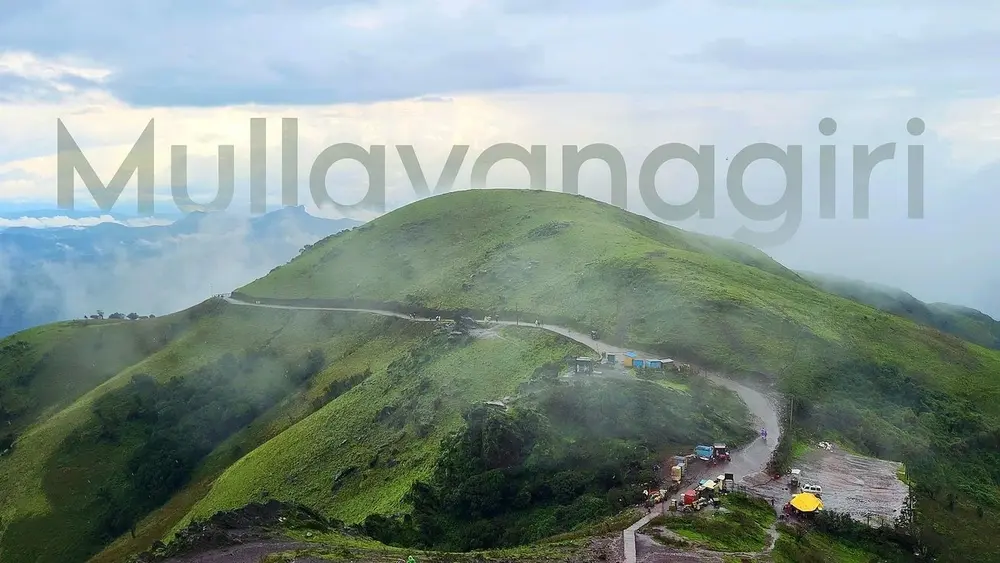
At 1,930 meters (6,330 feet), Mullayyanagiri is the crown jewel of Chikkamagaluru and the highest peak in Karnataka. Part of the Chandradroṇa range, it’s often described as the tallest point between the Himalayas and the Nilgiris. On a clear day, you can catch the faint glimmer of the Arabian Sea from the summit.
There are two ways to get to the top. The popular Sarpadari trekking trail starts about 15 km from Chikkamagaluru town and runs roughly 3–4 km. Alternatively, you can drive close to the summit and climb 450–500 stone steps in about 20–30 minutes. For the more adventurous, the 10 km ridge trek from Mullayyanagiri to Baba Budangiri is an experience worth every step.
- How to get there: 20–25 km from Chikkamagaluru town, about an hour’s drive. Head toward Baba Budangiri and take a left near Kaimara.
- Best time: September to April. Avoid during monsoon — the paths get dangerously slippery.
- Entry fee: No formal entry fee. The forest department checkpost may charge around ₹250–300 plus parking.
- Timings: 6:00 AM to 6:00 PM
- Nearby: Seetalayangiri, Baba Budangiri (23 km), Manikyadhara Falls
- Tip: There’s no mobile signal at the summit. Carry an offline map, at least 2 liters of water, and some snacks.
2. Baba Budangiri – The Birthplace of Indian Coffee
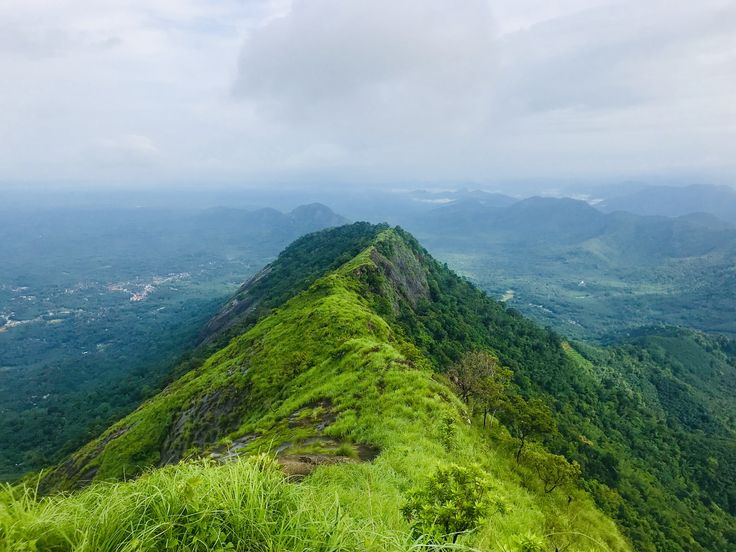
At 1,895 meters (6,217 feet), Baba Budangiri is Karnataka’s second-highest peak. But this mountain is far more than a trekking destination — it’s where Indian coffee was born, and one of the rare sacred sites where Hindu and Muslim devotees worship side by side in complete harmony.
Around 1670, the Sufi saint Baba Budan was returning from the Hajj pilgrimage when he came across coffee at the port of Mocha in Yemen. At the time, Yemen had a strict ban on exporting raw seeds — an offense punishable by death. Considering 7 a sacred number in Islam, he concealed seven beans in his robe and planted them in the Chandradroṇa hills upon his return.
The sacred cave shrine at the summit — Sri Guru Dattatreya Baba Budan Swami Dargah — is revered by both Hindus and Muslims. Inside, an eternal flame burns continuously, and you’ll hear both bhajans and qawwali floating through the air. The surrounding forests, sweeping grasslands, and the Kurinji flowers that bloom once every 12 years make this peak truly extraordinary.
- How to get there: Around 28–30 km from Chikkamagaluru, accessible by local bus, taxi, or personal vehicle.
- Best time: October to March
- Entry fee: Free
- Nearby: Mullayyanagiri (23 km), Manikyadhara Falls, Jhari Falls (12 km)
3. Hebbe Falls – A Hidden Cascade in the Forest
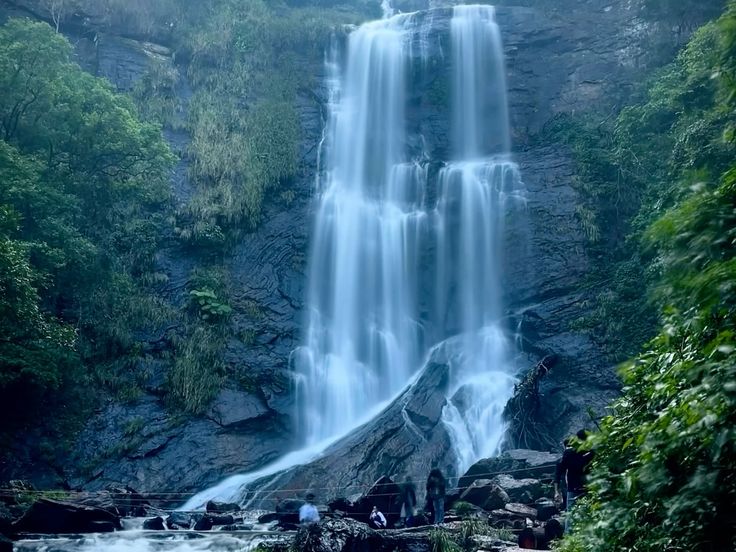
Tucked away inside a private coffee estate within the Bhadra Wildlife Sanctuary, Hebbe Falls is one of the most stunning waterfalls in Karnataka. The water plunges 168 meters (551 feet) in two stages — the larger Dodda Hebbe (around 76 m) and the smaller Chikka Hebbe (around 61 m).
To reach the falls, you’ll need to travel the last 7–8 km through a rough jungle track in forest department-operated 4×4 jeeps. After that thrilling ride, a short 1 km walk brings you to the waterfall, where a natural pool at the base just begs you to dive in.
- How to get there: Around 65–70 km from Chikkamagaluru. Head to Kemmangundi first and hire a jeep from the checkpoint there. Per person cost is approximately ₹400–590 (shared, 8 people per jeep).
- Best time: October to January
- Entry fee: None. Jeep charges apply.
- Timing: Reach the checkpoint by 3:00 PM
- Nearby: Kemmangundi, Z Point, Kallahatti Falls
- Tip: Carry an extra set of clothes if you plan to swim. After the monsoon, wear leech-proof socks.
4. Kudremukh National Park – A Treasure Chest of Western Ghats Biodiversity
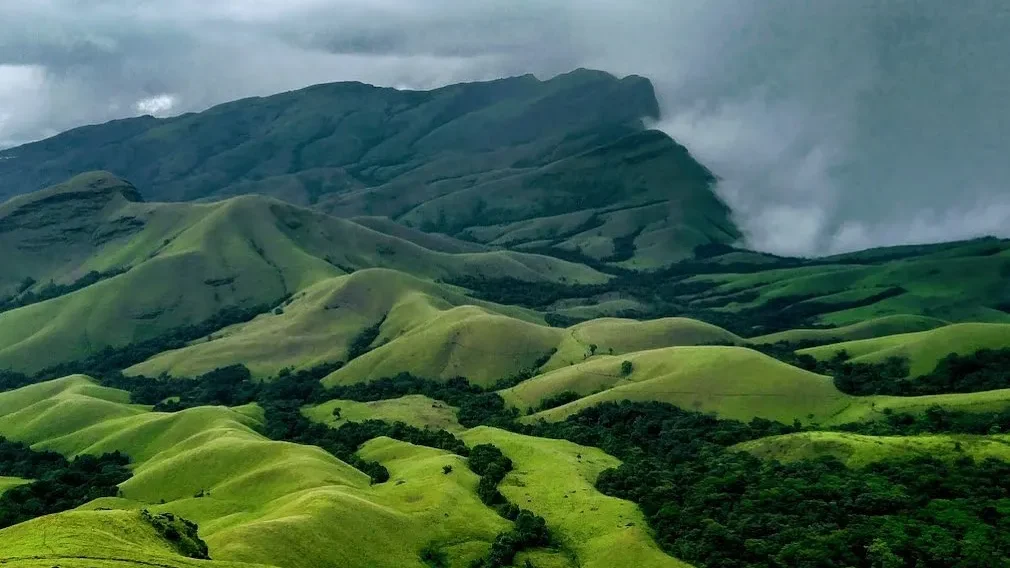
Kudremukh National Park is the second-largest protected forest area in the Western Ghats, spreading over 600.57 sq km across Chikkamagaluru, Dakshina Kannada, and Udupi districts. The name means “horse face” in Kannada — and when viewed from a certain angle, the main peak does look remarkably like a horse’s face.
The Kudremukh peak stands at 1,894 meters (6,214 feet), making it Karnataka’s third-highest summit. The full round-trip trek of 16–22 km takes 8–10 hours. The park is home to tigers, leopards, wild dogs, gaur, sloth bears, the endangered lion-tailed macaque, and over 200 species of birds. Gangamula, the origin point of the Tunga, Bhadra, and Netravathi rivers, is located right here.
- How to get there: Around 95–100 km from Chikkamagaluru via Kalasa to the Mullodi forest office.
- Best time: October to May
- Entry fee: ₹200 for Indians, ₹1,000 for foreigners. A trekking permit (around ₹575) is mandatory — book in advance through the forest department website. A guide is compulsory. Camping is strictly prohibited.
- Nearby: Kadambi Falls, Hanumangundi Falls, Horanadu Annapoorneshwari Temple
5. Kemmangundi – The Royal Summer Retreat
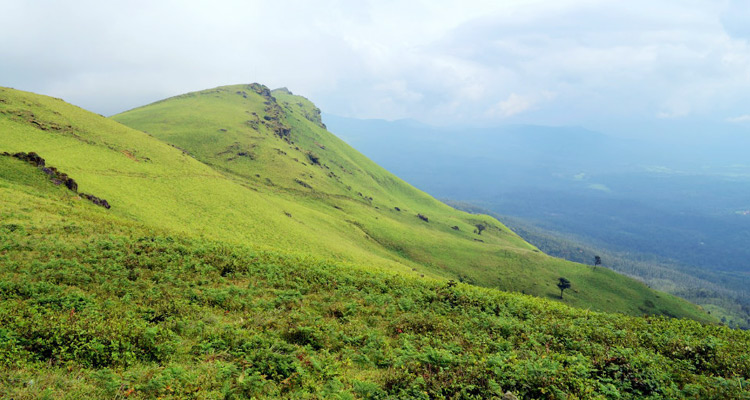
Also known as Sri Krishnarajendra Hills or K.R. Hills, Kemmangundi is a gorgeous hill station at 1,434 meters (4,703 feet). Often called the “Ooty of Karnataka,” it became famous in the early 20th century as the summer retreat of Mysore Maharaja Krishnaraja Wadiyar IV.
The Raj Bhavan, built in 1932, sits amidst beautiful gardens offering 360-degree views. The Rose Garden and Rock Garden, maintained by the Karnataka Horticulture Department, are major draws. Kemmangundi also serves as the base for visiting Hebbe Falls, Z Point, Kallahatti Falls, and Shanti Falls.
- How to get there: 53–55 km from Chikkamagaluru, roughly 2 hours. A private bus departs from Lingadahalli Junction at 9:30 AM.
- Best time: September to February
- Entry fee: Free
- Nearby: Hebbe Falls (10 km), Z Point (5 km), Kallahatti Falls, Shanti Falls
6. Jhari Falls (Majjige Falls) – A Milky Cascade Through Coffee Country
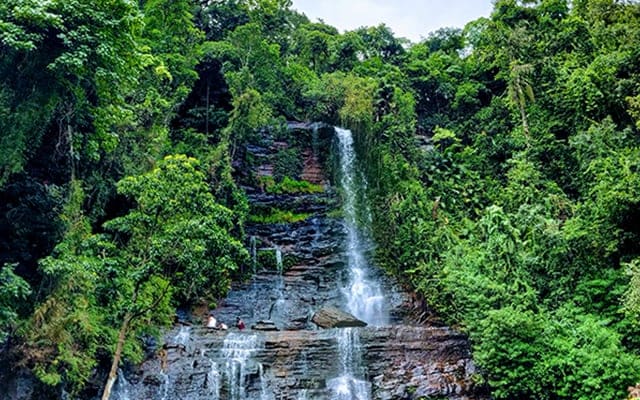
Jhari Falls is popularly known as Majjige Falls — because the water flows thin, wide, and white as milk over steep rocks. Tumbling roughly 50–70 meters in two stages, this waterfall offers some of the most photogenic views in all of Chikkamagaluru.
A natural pool at the base of the first stage invites you for a swim. The more adventurous can climb a muddy 30-meter trail up to the second tier.
- How to get there: About 22–24 km from Chikkamagaluru. Look for the turn near Attigundi village. The last 4–5 km requires a jeep, followed by a 30-minute walk.
- Best time: October to February
- Entry fee: None. Jeep charges: ₹600–800.
- Timings: 8:00 AM to 5:00 PM
- Nearby: Mullayyanagiri, Baba Budangiri, Manikyadhara Falls
7. Belavadi Veeranarayana Temple – A Hoysala Masterpiece
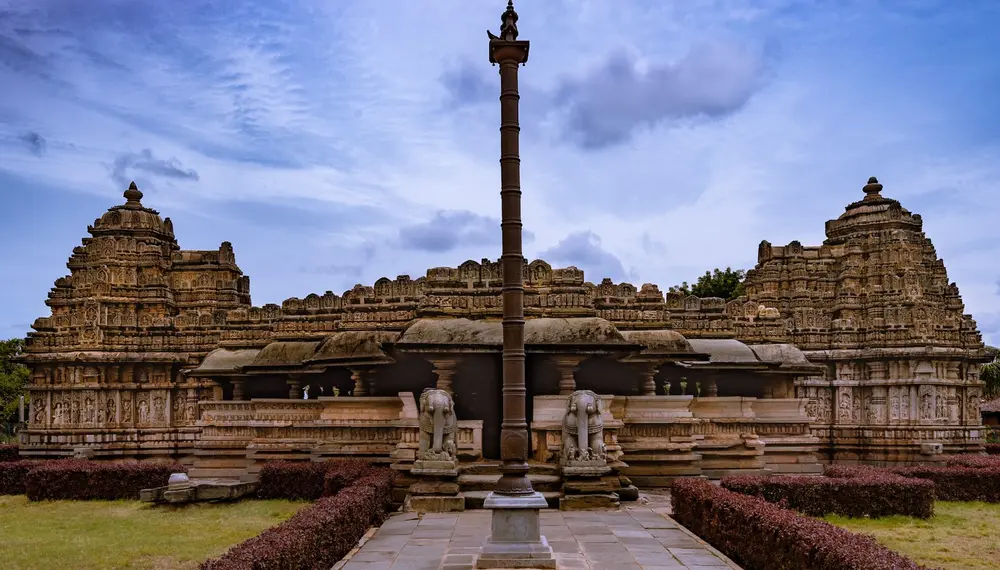
The Veeranarayana Temple at Belavadi is among the largest, most intricate, and best-preserved Hoysala temples in India. Built around 1200 CE by Hoysala king Veera Ballala II, it’s a trikuta (three-shrine) complex and a protected monument under the Archaeological Survey of India (ASI).
The temple stretches 65 meters in length and has a pillared hall (rangamantapa) 103 feet wide, supported by 108 lathe-turned pillars — no two of which share the same design.
The three shrines:
- Veeranarayana (central): An 8-foot four-armed Vishnu idol
- Venugopala (south): An 8-foot Krishna playing the flute — considered one of the most beautiful Krishna sculptures in existence
- Yoga Narasimha (north): A 7-foot Narasimha in yoga posture
Special attraction: Every year on March 23rd, sunlight passes through seven successive doorways and falls directly onto the Veeranarayana idol — a remarkable feat of astronomical architecture.
- How to get there: About 30 km from Chikkamagaluru, 12 km from Halebidu.
- Entry fee: Free (ASI monument)
- Timings: 8:00 AM to 2:00 PM, then 4:30 PM to 6:30 PM. Photography inside the temple is not permitted.
- Nearby: Halebidu (12 km), Belur (27 km)
8. Z Point – The Best Sunset Viewpoint in Chikkamagaluru
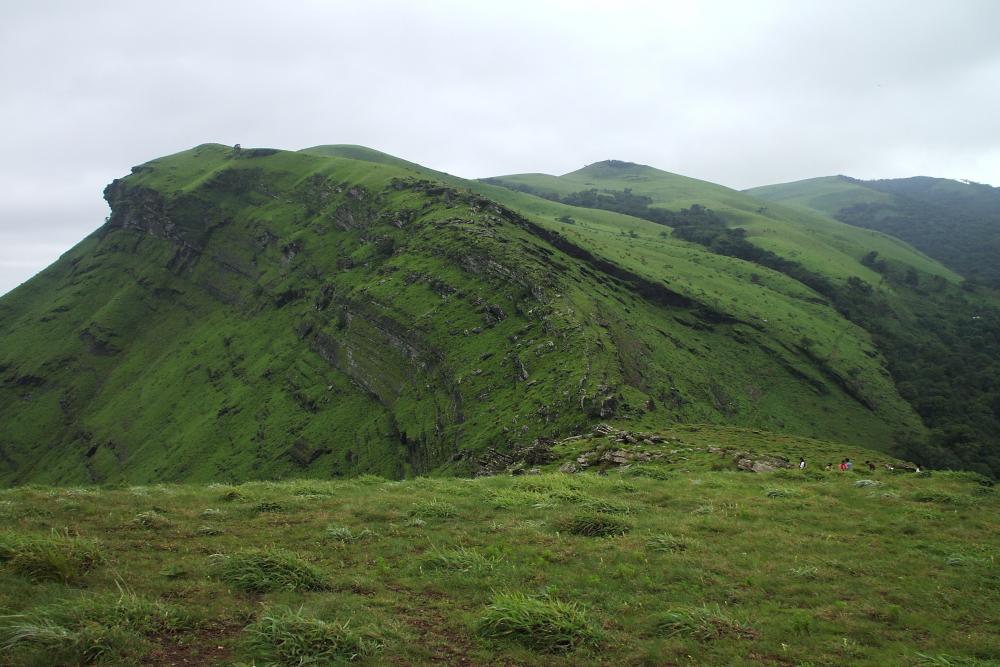
Z Point is a stunning viewpoint near the tip of the Kemmangundi hill station, sitting at around 1,500 meters. It offers one of the most breathtaking panoramic views in the Western Ghats — deep valleys, endless green ridgelines, and a sunset that burns gold and red.
It’s called “Z Point” because the trail zigzags on the way up. It’s about a 3 km trek from the Kemmangundi Raj Bhavan, passing through Shanti Falls along the way — where the water stays ice-cold even in summer. Once you reach the promontory at the top, the Western Ghats stretch out endlessly in front of you.
- How to get there: 5 km from Kemmangundi. No vehicle access — it’s trekking only.
- Best time: September to February
- Entry fee: No formal fee. A checkpoint charge of around ₹100 may apply.
- Timings: 6:00 AM to 6:00 PM. Set aside 2–3 hours in total.
- Nearby: Kemmangundi Raj Bhavan, Shanti Falls, Kallahatti Falls, Hebbe Falls
9. Coffee Estates – Experience the Birthplace of Indian Coffee
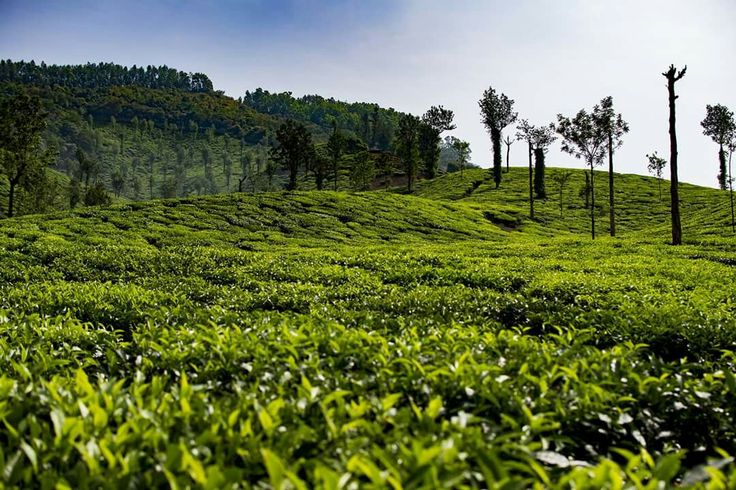
A visit to Chikkamagaluru is genuinely incomplete without spending time on a coffee estate. Today, the region grows both Arabica (the soft, aromatic coffee grown at higher elevations) and Robusta (the stronger variety from lower slopes). Alongside coffee, the estates also cultivate black pepper, cardamom, and vanilla.
The signature experience here is a “seed to cup” plantation tour — a guided walkthrough of every stage from the coffee plant and cherry-picking to drying, roasting, and finally tasting. Cost is approximately ₹950–1,000 per person.
There’s also the Coffee Museum (Coffee Yatra) on Kadur Road, which traces the full history of Indian coffee (closed on weekends). Hundreds of homestays, including the 200-year-old Tippanahalli Estate and The Serai by the Coffee Day Group, offer a genuine Malenadu experience.
- Best time to visit: November to January — harvest season
- Tip: Buy fresh coffee beans, black pepper, cardamom, and vanilla directly from the estates. You won’t find this quality or price anywhere else.
10. Sringeri Sharadamba Temple – One of India’s Most Sacred Monasteries
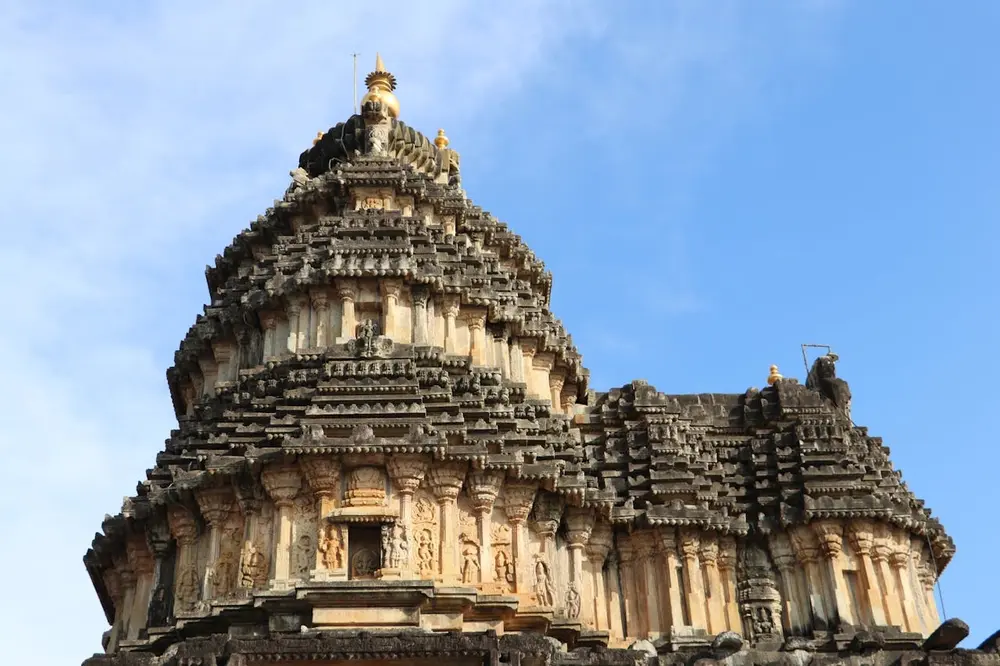
The Sringeri Sri Sharadamba Temple is one of South India’s most important pilgrimage sites. It’s one of the four great mathas (monasteries) established in the 8th century by the philosopher-saint Adi Shankaracharya to protect the Advaita Vedanta tradition — the other three being at Dwarka, Puri, and Badri.
The story goes that while Shankaracharya was walking along the banks of the Tunga river, he witnessed a cobra spreading its hood over a frog about to give birth, shielding it from the sun. Taking this as a sign of divine grace, he declared the spot sacred and established the matha here. A statue of Kappe Shankara, commemorating this moment, still stands on the grounds.
The main shrine houses Goddess Sharada seated on a chakra-pitha, holding a parrot in a cage and a rosary. The Vidyashankara Temple (1338 CE) within the complex is a blend of Hoysala, Chalukya, and Dravidian architecture. Its 12 zodiac pillars are a marvel of astronomical design — sunlight falls on each pillar in sequence corresponding to the Hindu calendar month, with the pillars arranged to mirror the zodiac.
- How to get there: Around 85–87 km from Chikkamagaluru, roughly 2 hours. Buses connect from Chikkamagaluru, Hassan, and Shimoga.
- Best time: Year-round. The Sharada Navaratri festival is especially special.
- Entry fee: Free
- Timings: 6:00 AM to 2:00 PM, 4:00 PM to 9:00 PM
- Nearby: Agumbe, Tunga river ghats
How to Get to Chikkamagaluru
By Air The nearest airports are Mangalore International Airport (IXE) — about 150 km away, 5–6 hours by road — and Kempegowda International Airport, Bangalore (BLR) — around 245 km, 4–5 hours. Buses and taxis are available from both airports.
By Train The nearest major railway station is Kadur Junction, about 40 km away. Bangalore has 6–7 daily trains to Kadur, taking roughly 3 hours. From Kadur, it’s another 45–60 minutes to Chikkamagaluru by bus or auto-rickshaw.
By Road Road travel is the easiest and most popular option. From Bangalore, it’s a 5–6 hour drive (245 km) via NH75 through Hassan and Belur. From Mangalore: 150 km (3–4 hours). From Mysore: 172 km (4 hours). From Hassan: 55–70 km (1.5 hours). KSRTC and private operators like VRL and Kaveri Travels run regular services.
Travel Tips
How many days: Plan for at least 3–4 days to cover the highlights.
- Day 1: Mullayyanagiri + Baba Budangiri
- Day 2: Kemmangundi + Z Point + Hebbe Falls
- Day 3: Kudremukh or Coffee Estate tour + Belavadi Temple
- Day 4: Sringeri
Book accommodation early: October–January and long weekends fill up fast. Coffee estate homestays (₹1,500–5,000/night) give you the most authentic experience.
What to wear: Good trekking shoes are a must. Carry a warm jacket, a raincoat, and insect repellent. After the monsoon, protect yourself against leeches.
Essentials for remote areas: Offline maps, a power bank, 2–3 liters of water, snacks, and a full tank of fuel. Fill up before heading to Kemmangundi or Kudremukh.
Respect the environment: Don’t litter — carry your trash back. Plastic is banned inside Kudremukh National Park. Don’t disturb the wildlife.
Eat local: Don’t leave without trying akki rotti, kadambala, ragi mudde, and holige. Vanilla coffee is a must. Meat-eaters should look out for Coorg pandi curry and local mutton curry — both are exceptional.
A Place That Rewards Every Kind of Traveler
Chikkamagaluru is one of those rare destinations where history, nature, spirituality, and food culture all converge at altitude. In a single day, you can summit Karnataka’s highest peak in the morning, trace the 350-year-old origins of Indian coffee at noon, admire 800-year-old Hoysala stone carvings in the evening, and fall asleep in a misty coffee estate homestay at night — all within the same district.
What sets Chikkamagaluru apart from other hill stations is its depth. Baba Budangiri isn’t just a mountain — it’s a living example of Hindu-Muslim coexistence. The coffee estates aren’t just a pretty backdrop — they are literally the birthplace of a national industry. Kudremukh isn’t just a trek — it’s a UNESCO-recognized biodiversity hotspot. And Belavadi isn’t just a temple — it hides an astronomical wonder that happens only one day a year.
Come with enough time. A weekend gives you the highlights. Four or five days, and Chikkamagaluru will quietly become one of your favourite places on earth.